Snow Hauling vs. Snow Plowing: What to Do When a Lot Runs Out of Room
Plowing moves snow to the edge of the lot. Hauling takes it away. A lot that's been plowed all season eventually needs the second one.
September 3, 2026 · 2 min read
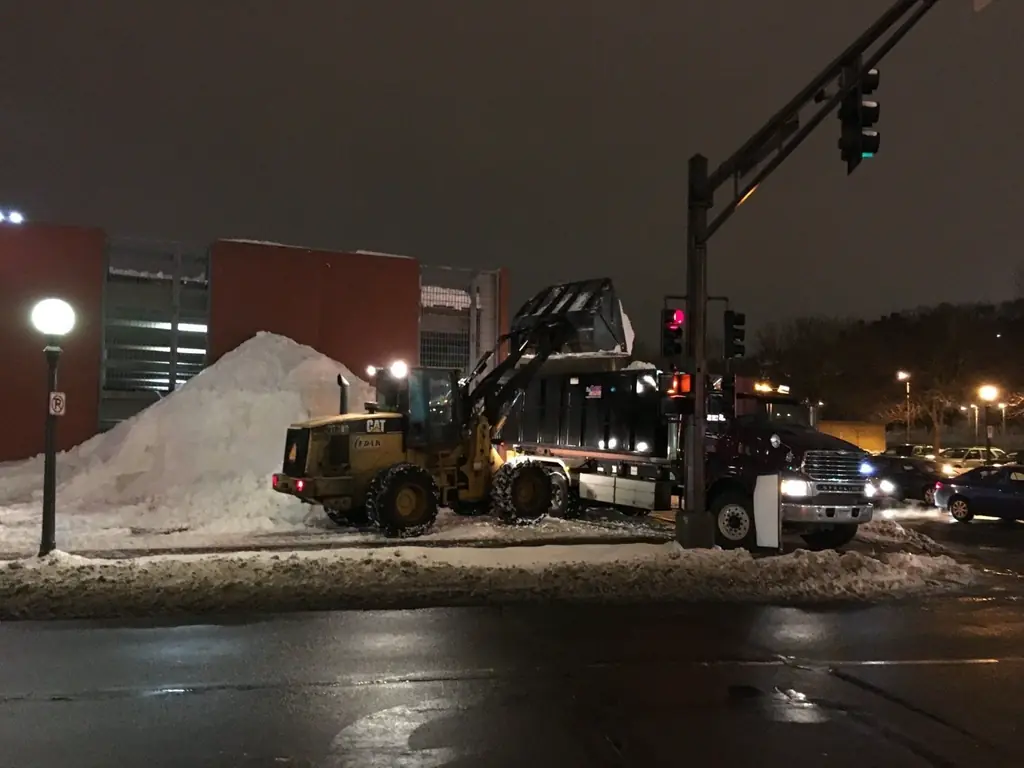
Plowing and hauling get talked about like they're the same service. They're not. Plowing pushes snow out of the drive lanes and parking stalls into piles at the edge of the lot. Hauling picks those piles up and takes them off the property entirely. Every lot needs the first one after nearly every snowfall. Not every lot needs the second one every time, but the ones that go all winter without it usually end up with a problem that plowing alone can't fix.
Where the snow actually goes when you just plow
A plow truck has to put the snow somewhere, and on most commercial lots that somewhere is the corners, the edges along the fence line, and the ends of parking rows. That's fine for the first storm or two of the season. The piles are small, they melt down between events, and nobody notices. By January or February on a lot that gets plowed storm after storm without ever being hauled, those piles have grown into the parking spaces themselves, and a lot that had forty stalls in November might functionally have thirty by mid-winter.
The three problems a full lot creates
- Lost parking. Snowbanks along the edges and between rows eat real stalls, and a property that's already tight on parking for tenants, customers, or staff loses more of it every storm.
- Sightline problems at exits. A pile built up next to a driveway or exit lane blocks the view of oncoming traffic and pedestrians on the sidewalk, which is a liability problem as much as a convenience one.
- Meltwater that refreezes across the lot. A tall pile melts during the day and that water runs back across the pavement, then refreezes overnight into a sheet of ice in the exact spots people are walking and driving.
What hauling actually does
Hauling is picking up snow with equipment like front end loaders and moving it into large volume roll off trucks, then driving it off the property and disposing of it in remote areas so the lot goes back to its full footprint. Ace Services runs this as its own service, separate from plowing, and it's built around the same equipment lot in South Minneapolis that supports their plow trucks. As their own service page puts it, the goal is removing excess snow "so that your business can continue to be accessed easily and safely," not just moved a few feet out of the way.
When to ask for it
A property manager doesn't need to guess at this. If parking is visibly tighter than it was at the start of the season, if a pile is blocking the view at an exit, or if the same stretch of pavement keeps re-icing after every thaw, that's the lot telling you it's out of room to push snow into. Scope isn't the limiting factor. Ace Services describes handling "a 20 acre parking lot cleared of snow or just a gas station lot," using the same fleet of dump trucks, roll off trucks, and loaders either way.
Ace Services — (612) 490-4001
Call (612) 490-4001More articles
What to Expect From an Overnight Snow Crew Before Your Doors Open
The lot has to be clear before your first tenant, shift, or customer shows up, and that work almost always happens while the building is empty.
Salting and Sanding a Commercial Lot: What Actually Works on Minnesota Ice
Salt melts ice. Sand just gives you something to grip. Mixing up which job you need is how a lot stays slick after it's already been treated.